
Hi guys,
Our travel agency, Rajputana Cabs, operates throughout Rajasthan and in many other cities outside Rajasthan. But our head office is in Jaipur, and thus, being locals, we can share with you the best idea of how many days you need to explore Jaipur.

Hawa Mahal, Jaipur
How many days are enough for Jaipur?
Normally, travelers come to Jaipur to experience:
- Forts
- Palaces
- Temples
- Rajasthani folk dance and local food
- Local handicraft shopping, etc.
And to enjoy all these five to six experiences, you need at least two full days, from 8 am to 11 pm, plus one extra day for arrival and departure.
So, for example, the best answer would be that you need three days to explore Jaipur, with:
- Day 1: Arrive in Jaipur by morning and visit a few sites in the evening.
- Day 2: Complete your Jaipur sightseeing.
- Day 3: Continue sightseeing until the evening and then depart for your hometown.
If you are coming from cities that are quite far away, like Mumbai, Bangalore, or Kolkata, you can still complete Jaipur sightseeing tour in three days.
As per the itinerary shared below, we have explained how to plan the best itinerary for Jaipur, along with arrival and departure, within three days from anywhere in India.
Best Arrival time on day 1 in Jaipur

Jaipur international airport view from inside
If your flight, train, bus, or cab can drop you in Jaipur before noon, that will be the very best arrival time for you because you can straight away check in to your hotel, rest for an hour or two, and then, after a light lunch, you can easily enjoy seven to eight hours of sightseeing in Jaipur.
But for any reason, if you can’t arrive in Jaipur by noon and your arrival is after 3–4 pm., then I would personally suggest that you don’t plan any sightseeing for Day 1.
Instead, you can enjoy Day 1 as a full sightseeing day, Day 2 as another full sightseeing day, and either catch a late train or flight on Day 2, or take an early morning or noon departure flight or train on Day 3.
Day One in Jaipur

City Palace of Jaipur
So, if your arrival is before noon on day 1, then after 1 to 2 hours of rest and a light lunch, you can plan a sightseeing tour of Jaipur, where you will visit:
- Hawa Mahal
- City Palace
- Govind Devji Temple
- Jantar Mantar
- Pink City market area
All these five sites mentioned above are within a radius of one kilometer in the Old Pink City part of Jaipur.
This sightseeing will easily take your time from around 2–2:30 p. to 8 pm
After 8 pm., we would suggest you plan dinner anywhere in the Pink City or near your hotel. At the end, we have suggested a list of top authentic Rajasthani restaurants that you can try.

Suvarna Mahal Restaurant
Checkout:
- LMB Sweets & Restaurant
- Suvarna Mahal
- Peacock Restaurant
Day 2 in Jaipur
Day 2 is completely reserved for Jaipur sightseeing, from 7–8 am till 11 pm to midnight.

Amber Fort, Jaipur
The best itinerary, which will also save you a lot of time and which we suggest to all our guests, is to first visit:
- Amber Fort
- Panna Meena ka Kund
- Jal Mahal
- Royal Gaitor
- Jaigarh Fort
- Nahargarh Fort
Jaigarh and Nahargarh Fort are situated on a hill close to each other. Plus, you can also visit the newly built Nahargarh Wax Museum.
After this, you can plan your lunch anywhere on the Amer side of Jaipur. When I say Amer, all the sites mentioned above, including the hill forts of Jaigarh and Nahargarh, are part of an area that is even older than the Pink City and is situated in eastern Jaipur, known as Amer.
For lunch checkout:
- Rainbow Restaurant, near Jal Mahal
- Khandelwal’s A Multicuisine Restaurant
- Rajwada Restaurant, Char Darwaja
Actually, before Jaipur was built around 1737 CE, Amer was the main city, which was later replaced by the Pink City area. But still, Amer was maintained as a military fort area for the Jaipur monarchs.

Galta Monkey Temple
So, after your lunch, you will visit Galta Monkey Temple and Sisodia Bagh, and then leave the Amer area and come to Jaipur city, where you will visit:
- Birla Temple
- Moti Doongri Temple
- Albert Hall Museum
- Patrika Gate
From 7 pm to 11 pm., you will enjoy a trip to Chokhi Dhani Village, which is a Rajasthani theme based amusement park, opened in 1989.
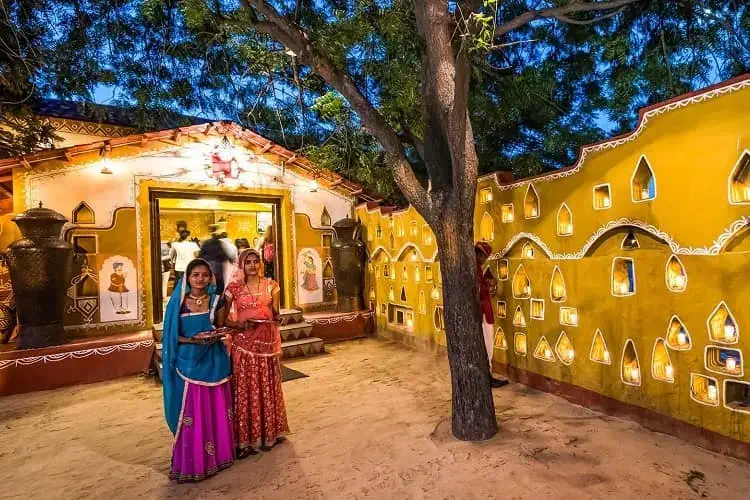
Chokhi Dhani
The entry tickets (around Rs 1000 per person) even include an unlimited Rajasthani Thali, served in a traditional way, where you will sit on the ground and will be served almost every dish (pure veg) which you can eat in a thali.
Apart from the meal, at Chokhi Dhani, you will enjoy live musical shows, not at one big stage, but at three to four small, very small stages. Then you can enjoy camel rides, horse rides, elephant rides, and also enjoy games like shooting, archery, and a lot more.
Plus, there are also a lot of shops here, which you can explore; it’s completely up to you. A complete tour of Chokhi Dhani easily takes two to three hours.
By night, somewhere around 11–11:30 pm, the driver will drop you back at your hotel.
Day 3 in Jaipur
If your arrival was on Day 1 and you have continued with the same itinerary suggested above, today you will have sightseeing time from the morning until around 6 p.m., or maximum 7 p.m.
By Day 3, you have already visited the two main parts of Jaipur, which are the Pink City area and the Amer area. So, today we will suggest some newer sites that have opened in Jaipur, which you can explore.
Alternatively, you can plan this day as a leisure day, where you can visit some popular tourist markets and local market destinations in Jaipur. You can also visit a few sites that are very close to Jaipur.
So, here we are introducing two different itineraries for Day 3.
Itinerary 1:

Pink City Markets
In the morning, plan a visit to Jagdish Temple at Goner, followed by a trip to Kishan Bagh Sand Dune Park, where you can see sand dunes, sandstone formations, desert vegetation, and other features representing the desert landscape of Rajasthan. Kishan Bagh is located within Jaipur city itself.
Note: Kishan Bagh Sand Dune Park is generally open from Wednesday to Monday and remains closed on Tuesday, so plan this visit accordingly.
After visiting these two sites, you can either visit the tourist markets, which are mostly the Pink City market and Amer-side markets, or you can also visit other popular shopping destinations like:

World Trade Park & GT Market
- GT Market near World Trade Center
- MI Road market
- Rajapark market
Here, MI Road, Pink City, and Amer are more tourist-type markets, while GT Market near World Trade Center is more of a top-brands shopping destination in Jaipur, where both locals and tourists come to shop.
Rajapark is a popular local market area not far away from MI Road and is actually more of a popular local market among the people of Jaipur.
Itinerary 2:

Chand Baori Stepwell
Along with the itinerary mentioned above, you can also plan Day 3 like this.
In the morning, we will suggest you leave early by 8 am and reach a small town just outside Jaipur, around 90 km away, called Abhaneri.
Here, you will see a 1,200 year old stepwell named Chand Baori, which became a sensation in India after being shown in the Batman movie The Dark Knight Rises (2012).
After that, many Bollywood movies have also been filmed here because of its unique construction.
There are more than 3,500 steps in Chand Baori, and I have personally gone there a few years back. It is almost impossible to go down and come back using the same stairs.
So, by 8 am, we will leave for Chand Baori. By 9 am, we’ll reach there. Stay here for half an hour, and after 10 am, you can either plan a light breakfast at Abhaneri village or just come back to Jaipur, reaching around 11 am- 11:30 am.
After that, you can visit the famous Galta Monkey Temple, which has also become a very popular place in Jaipur after being featured in two documentaries on the National Geographic Channel.
These temples are actually quite old, maybe 1,000 years or more, but the place has become famous because of the monkeys here. They are such peaceful monkeys.
I would personally say that after visiting this place, the fear of monkeys was completely out of my heart. Whenever I see some monkeys, even though it is not allowed to feed them, I am quite confident in giving food to monkeys.

Hathi Gaon
After visiting the Galta Monkey Temple, you can come back to Jaipur and then visit the Nahargarh Biological Park and Elephant Ghaon, also known as Haathi Ghaon in Jaipur.
The Nahargarh Biological Park is a zoo area that is not more than five to ten years old, and Haathi Ghaon is a newer tourist destination where you can learn about elephants and interact with them.
The people living in Haathi Ghaon will tell you everything about elephants and explain that apart from elephant rides, there are a lot of other things you can enjoy with an elephant, such as walking with an elephant.
The ticket here is quite expensive, so please research the current ticket price before going here.
Then, you can spend some time at the popular markets, as we have shared above, or you can visit the places mentioned above.
So now, we have discussed a lot about what you can visit in Jaipur in three days.
Now, let’s talk about what you can eat in Jaipur, which popular restaurants you should visit, the markets of Jaipur, some hidden gems, and a few more things that will be useful for you. Let’s start.
Best food of Jaipur
Apart from visiting all the tourist sites in Jaipur, you should also know about the best street food and best restaurants in Jaipur for a taste of original Rajasthani food, especially:

Dal Baati Churma
- Dal Baati Churma
- Rajasthani Thali
- Pyaz Kachori
- Mirchi Vada
- Lal Maas
- Gatte ki Sabji
- Ghewar
- Camel Lassi
- And a few more.
Street Food of Jaipur
So, in Jaipur, while visiting all the various different tourist attractions mentioned above, you can stop at a few places and try the following:
1. Rawat Mishthan Bhandar:

Rawat kachori
Rawat Mishthan Bhandar, or Rawat Kachori, is one of the oldest sweet shops or halwai shops, which started from Jaipur Railway Station but now has opened many outlets in Jaipur.
I personally live in Jagatpura, and just two kilometers away is Rawat Mishthan Bhandar’s new branch, and believe me, I enjoy its kachori almost every week or every other week.
So, at Rawat, you can try their pyaz kachori, their samosas, mirchi vada, plus now they are also offering many homemade sweets. Rajasthan is not particularly famous for sweets, but you have to try its ghewar.
2. Dal Baati Churma:
Dal Baati Churma is like the national dish of Rajasthan, and every local here eats it, some people on a daily basis and some every week.
And as a local, if I have to try Dal Baati Churma, I will find a place which prepares baati and churma in the traditional way.
So, when I say traditional way, that means they use a product called a byproduct of cow dung known as kande, which is cow dung that is dried, and it is a good burning replacement for wood.
So, baatis & churmas are prepared on this over an iron stand, which is known as jaghara.
In Jaipur, if you want to try real Dal Baati Churma, only visit two places.
One is Ganesh Dal Baati Caters, who also have a restaurant in Sarovar by the name of Dal Baati Churma Jaipur, where they only serve Dal Baati Churma. And 2nd is a local restaurant, which is now opening multiple branches, and you can search for it by the name of Churmawala.
3. Rajasthani Thali:

Rajasthani Thali
So, when I say Rajasthani Thali, it includes Dal Baati Churma, gatte ki sabji, kher sangri, chutneys, bejad roti, tikka, aloo pyaz ki sabji, and a few more items which are originally from Rajasthan.
Now, a lot of people even offer Gujarati dishes, but that’s not a proper Rajasthani Thali. You can try the same at LMB Sweets in Pink City and at a new chain of restaurants opened by the name of Thali and More.
4. Lal Maas:
Now, for our guests who want to enjoy authentic non-vegetarian food of Jaipur, they should try Lal Maas, which is a mutton dish prepared with ghee. It’s more of a curry-type of dish enjoyed with bejad roti or parantha, or whatever you like.
To try it out, I would suggest going to a very hygienic place. You can check out restaurants near World Trade Center, Malviya Nagar, like Dawat Nama, or check out a restaurant like Handi in Malviya Nagar & MI Road.
Apart from that, there are many popular street food options and street food shops which you can visit along with the monuments.
5. Lassiwala at MI Road:

Lassiwala MI Road till 4 pm
Please note that the original Lassiwala closes his shop by around 4 pm, and he is the one on the left side with the L-shaped shop because many duplicates have opened nearby.
Look carefully for the original shop before ordering.
6. Gulab Ji Chaiwala:
Gulab Ji Chaiwala is one of the oldest tea sellers in Jaipur, and now he has a comfortable small cafe, still budget-friendly. And if you want something even more budget-friendly, he still offers tea at an open tea counter just in front of his cafe.
7. Ramchandra Kulfi Bhandar:
Ramchandra Kulfi Bhandar is another old and popular place where you can stop for kulfi, especially if you are visiting the old city. Their kulfi and rabri are quite popular, and it is a good place to finish your street-food experience with a traditional Rajasthani-style dessert.
8. Masala Chowk:
At Ram Niwas Garden, which is close to Albert Hall, there is an open-air food court by the name of Masala Chowk. It’s developed by the local authorities (JDA), where you will find a lot of stalls, serving everything from Rajasthani traditional food to modern food, like kachoris, samosas, lassi, kulfi, etc., along with common street foods like momos, burgers, etc. So, if you are a foodie, definitely visit this place.
9. Puranji Kachoriwala:
Along with Rawat Kachori, a popular local kachori option which you can try is Puranji Kachoriwala. By its name, it’s famous for its kachori, and it’s located on SBBJ Street, Chaura Rasta, in the Pink City area of Jaipur.
10. Sanjay Omelette, Egg Dee:
Sanjay Omelette is an egg-food joint at Bapu Nagar, not too far from SMS Cricket Stadium, Jaipur. This place has been serving egg dishes since 1981, and over the years it has become a popular destination for egg lovers in Jaipur.
On the internet, this place has also become quite sensational, and many foodies visiting Jaipur make sure to visit this place. You can try some of its popular dishes, including the egg pizza and masala omelette.
Best dinning restaurant of Jaipur
Along with enjoying street food of Jaipur, you have some amazing fine dinning options in Pink City, and some of the are globally famous like Bar Palladio at Narain Niwas Palace. So lets start with this one:
1. Bar Palladio

Bar Palladio
Bar Palladio: Bar Palladio is one of the few bars at a heritage palace, which is now converted into a luxury hotel in Jaipur. It is located at Narayan Niwas Palace, a full luxury heritage hotel.
Bar Palladio has now become one of the best bars in Rajasthan because of its beautiful interiors, candlelight seating, indoor and outdoor seating, and very elegant ambience.
It is one of the best places for an evening cocktail or wine in the Pink City.
Along with the bar, they offer some of the best Italian and continental food, of the same quality as you can try anywhere in the world, along with a good variety of non-vegetarian food and limited varieties of vegetarian food.
So, I would suggest you plan a one-night dinner here. It will cost around Rs 2,000 to 3,000 for two people.
2. Suvarna Mahal
Suvarna Mahal Restaurant
Again, a royal fine-dining restaurant at one of the most popular luxury hotels in Jaipur, the Rambagh Palace.
Rambagh Palace was once the main residence of the Maharaja of Jaipur, which was later converted into a hotel, with the Taj Group maintaining it.
Their restaurant, one of the most popular restaurants in Jaipur, Suvarna Mahal, is a grand hall with high ceilings, beautiful chandeliers and royal décor. Their main focus is still on Rajasthani food.
Here you can try their Rajasthani Thali, which includes many local dishes of Rajasthan, like Dal Baati, Ghevar, Jodhpuri Gatte, Ker Sangri, Laal Maas, Safed Maas, Bajre Ki Roti, garlic chutney and many more. They also offer continental food and North Indian cuisine, along with a fine variety of hard drinks, soft drinks, etc.
For a regular dinner, you can expect to spend around Rs 2,000–3,000 per person, but if you are going for their Rajasthani Thali, it is available for around Rs 7,000 plus taxes per person.
3. 1135 AD

1135 AD
1135 AD is a restaurant opened inside the Amber Fort by the Rajasthan Tourism Board, offering a luxurious fine-dining experience with beautiful views of Amber Fort and Maota Lake outside.
The tourism board has done very well to infuse the restaurant with Mughal architectural décor, and they named the restaurant 1135 AD as Amber Fort came into existence around this year.
Here you can try some of the most popular dishes from Rajasthan and Mughlai cuisine, including Laal Maas, Safed Maas, Dal Baati Churma, Rajasthani Thali and many more.
The prices are more affordable compared with the two options above, but it is still not a cheap restaurant. A meal for two here will cost around Rs 4,000, excluding taxes and charges.
Night Tour of Jaipur
In Jaipur, you can also plan a night tour, where the most common places which you can visit are:

Amber Fort Sound Light Show
- Amber Fort: Enjoy the Sound and Light Show.
- Albert Hall Museum: Visit the museum in the second half of the day, along with Birla Temple and Moti Dungri Temple.
- Jawahar Circle: Visit the musical fountains at Jawahar Circle.
Now, the Chokhi Dhani visit is one of the most popular options because it opens after 6–6:30 p.m. Travelers start coming here by 7 p.m. and easily stay here till 10–11 p.m.
The main attraction here is the unlimited Rajasthani thali, served in a traditional way, where you sit on the ground and the waiters, dressed in traditional Rajasthani clothes, serve you all the popular food like dal, baati, gatte, and many other things which we mentioned above.
Along with this, you will also find many small stages where musicians and dancers perform. Your kids can also enjoy various activities, and you can enjoy horse rides, camel rides, elephant rides, and camel cart rides, along with horoscope games like archery and shooting. You can also enjoy shopping here.
But we are also suggesting two more places in Jaipur which you can visit if you only want to enjoy traditional Rajasthani food, along with dance performances and some chill time.
- Jaipur Ri Dhani, Kukas
- Gulab Garh, Mansarovar
Best Shopping Destinations in Jaipur
In Jaipur, the famous shopping destinations are:
- Johari Bazaar
- Bapu Bazaar
- Nehru Bazaar
- Tripolia Bazaar
- MI Road
- GT Market, C-Scheme
- Raja Park Market
Johari Bazaar: Johari Bazaar is famous for jewellery, like Kundan and Meenakari, and especially gemstones because Jaipur is famous for emerald cutting and polishing. You can visit Johari Bazaar when you are exploring the Pink City.
Bapu Bazaar: Bapu Bazaar is located close to Johari Bazaar and is famous for block-printed clothes, bedsheets, souvenirs, clothing, and especially Rajasthani shoes, which are known as Rajasthani mojris. Shopping here can also be a bit cheaper, and you can find good deals. However, do haggle because this is a popular tourist market.
Nehru Bazaar: Not many people know about Nehru Bazaar, but it is actually a hidden gem where you can find good-quality Rajasthani shoes, especially mojris, along with clothing, handicrafts, and affordable souvenirs.
Tripolia Bazaar: Tripolia Bazaar is mostly famous for handmade bangles and other handicrafts. It is also located in the Pink City area, so you can easily explore it while visiting the other traditional markets of Jaipur.
MI Road: MI Road is more of a modern-day market of Jaipur. It is not just limited to tourists, as a lot of locals also come here because you can find brands of almost all major companies.
Traffic movement is generally convenient along this one-way stretch, and you can explore textiles, clothes, jewellery, laptops, and many other products. And yes, do try the lassi at Lassiwala here, but make sure you visit the original one.
GT Market, JLN Marg: Since I live in Jaipur, if I have to buy a branded item, jewellery from a top Indian brand, or other quality products, I would visit GT Market in C-Scheme. It is more like an open market. Parking can be an issue, but traffic movement is generally manageable because the area is well maintained.
For example, if I have to buy a good-quality LED TV, jewellery from Kalyan Jewellers, clothes from a top brand, and also try some food at a fine-dining restaurant, I would visit this market.
Raja Park Market: Raja Park is also known for its Punjabi and Sindhi communities. Many families from these communities settled in Jaipur after the 1947 Partition.
Today, Raja Park has developed into a popular shopping destination, especially for women’s clothing, along with plenty of street food options serving Punjabi and Rajasthani dishes. It is one of the popular local markets in Jaipur and is worth visiting if you want to explore the city’s shopping and food culture.
Block Print Textiles in Jaipur

Block Print Textile
Jaipur and some of its suburban areas have now become famous not just in India but all over the world for their block-print clothes.
The most common and easily available one is the Sanganer block print, which is made in Sanganer, an industrial area inside Jaipur city.
So, you can visit Sanganer to get some of the cheapest rates for machine-made block print clothes.
But actually, block-print clothes became famous because of the people who were known as Chhipas.
Chhipas are a community that creates hand blocks made of wood and then prints those blocks on cotton cloth, creating nice designs. The colours used in these blocks are natural, made from vegetables and herbs. To buy these, you need to drive just 20–30 kilometres from Jaipur via Ajmer Road.
This place is called Bagru, and the block-print clothes made here are known as Bagru block prints.
At Bagru, you will find hundreds of small, home-sized factories.
The Famous Gemstone Industry of Jaipur

Chameliwala Market Jaipur
Since the 18th century, when the Jaipur kingdom was established and its capital shifted from Amer to Jaipur, jewellers from Rajasthan and across North India came to the city and set up their businesses here.
So from the 18th to the 21st century, generations of jewellers & gemstone cutters have built Jaipur’s gemstone industry, making it a major international center for emerald cutting, polishing, and trading.
Just as Surat is famous for diamond cutting and polishing, Jaipur is famous for emerald cutting and polishing.
That is also why many astrologers have established themselves in Jaipur, some of whom are globally famous. This combination of gemstone craftsmanship, jewellery trading, and astrology has made Jaipur a popular destination for gemstone buyers.
So, if you are in Jaipur, you can visit a few jewellers, astrologers, and other gemstone dealers, mostly available around Johari Bazaar.
But the real whole sale gemstone market in Jaipur is Chameliwala Market.
Here, you can explore a wide variety of gemstones, including emeralds, and enquire about wholesale prices.
Along with Johari Bazaar, if you are looking for wholesalers and manufacturers, you can visit the Sitapura Industrial Area, which has many large factories and businesses working with gold, diamonds, silver, and gemstones.
Plus, you can also visit the Museum of Gem and Jewellery, which is featured on the Rajasthan Tourism website, to learn more about gemstones and the jewellery industry.
But do be careful, because Jaipur has a large gemstone market, and you should stay away from frauds. Always verify the authenticity, quality, and certification of gemstones before making a purchase.
More Activities in Jaipur
So, we have shared a lot of information with you, like what places you can visit in three days, where you can eat local food, some of the best fine-dining restaurants and bars, along with shopping destinations. Now, let’s talk about activities that are becoming quite popular in Jaipur.
1. Elephant Ride in Jaipur

Elephant ride Amer Fort
In Jaipur, elephant rides have now become a popular activity that you can enjoy at a few places, with two of them being the best options.
The first is an elephant ride at Amer Fort.
At Amer Fort, near the lake area, you will find several elephant riders approved by the local Rajasthan Tourism Board. They charge a fee for a one km elephant ride from the road up the zigzag pathways in front of Amer Fort.
Please note that this activity is available only before lunchtime, from the morning until around noon.
The second place to enjoy an elephant experience in Jaipur is Hathi Gaon, located around two km from Amer Fort.
Hathi Gaon is now included among Rajasthan’s sightseeing places. This place has been developed to provide elephants with a dedicated habitat and facilities for their care.
Here, the mahouts who look after the elephants can teach you how to stand next to an elephant, walk alongside one, and interact with it. Instead of taking a ride, they may also suggest enjoying a walk with an elephant.
Here, you will also learn how to feed an elephant properly. Plus, one of the main attractions is a small lake where you can experience bathing with an elephant, making it a unique activity.
You can learn a lot about elephants, their care, and their daily routines during your visit. By the time you leave, you will have gained a much better understanding of these magnificent animals.
Please note that the entry ticket and activities here can be quite expensive, costing around Rs 1,500–2,000 per person, depending on the package. However, it can be worth visiting if you are interested in spending time with elephants.
3. Hot Air Balloon Ride in Jaipur

Hot Air Balloon at Amer Jaipur
Apart from the monsoon season and the months of May and June, you can plan a hot air balloon ride in Jaipur during the suitable operating season.
The take-off location is not too far from Amer Fort, and the ride gives you an aerial view of Amer Fort, Jal Mahal, Nahargarh Fort, Jaigarh Fort, and the surrounding Aravalli hills.
For a hot air balloon ride, you need to pay a fee per person, but it is a unique experience that lets you see Jaipur from a completely different perspective.
Always try to book your tickets in advance, as walk-in tickets may not be available.
4. Camel Safari in Jaipur

Camel safari Pushkar
Although Jaipur does not have a large natural desert, you can still enjoy a camel safari at a few places around the city.
One option is Jal Mahal, where you can enjoy a simple camel ride along the road overlooking the lake. Some operators also offer packages in which you can dress up in traditional Rajasthani clothes, such as ghagra cholis, and take photographs.
Another interesting destination is Dhulagarh, where you can visit Chhabra Sand Dune.
This place is used for local film shoots that require a sandy desert-like setting in Jaipur. Here, you can enjoy a proper camel safari on the dunes.
The dunes are not very large, but the stretch is around a km long, making it an interesting experience.
Lastly, if you really want to enjoy an authentic camel safari near Jaipur, you can visit Pushkar, which is approximately 135 km away, or around a two-hour drive, depending on the route and traffic.
In Pushkar, you can also stay in desert camps and enjoy various activities, including live performances, overnight stays in luxury camps, and other cultural experiences.
Although the desert landscape here is not as extensive as in Jaisalmer, you can still enjoy a proper desert-style experience.
5. Sunrise and Sunset in Jaipur

Sunset in Nahargarh Jaipur
Nowadays, watching the sunrise and sunset at different locations in Jaipur has also become quite popular.
One of the best locations is Nahargarh Fort, where you can enjoy beautiful views of the city from above. Another option is Kishan Bagh, a natural landscape park that has also become popular among visitors looking for scenic views and photography spots.
If you enjoy photography, carry your camera or mobile phone and capture the beautiful colors of the sky during sunrise or sunset.
Places to Visit Near Jaipur
I have shared all the details a traveler needs if planning a trip to Jaipur. And now you know how many days are required to explore Jaipur. It’s three days.
But if you can make your trip five days, six days, or a week long, or just add two extra days, you can visit some beautiful and scenic places near Jaipur.
Below, I have shared a list of top places along with their distance from Jaipur, which you can visit on a single-day trip or a maximum two-day journey.
1. Ajmer-Pushkar

Ajmer sharif dargah
Ajmer and Pushkar are just a 135–150-kilometer drive away from Jaipur and are famous for:
- Ajmer Sharif Dargah
- Pushkar Brahma Temple
You can plan a one-full-day trip from Jaipur and return by night. Visit Ajmer Dargah, Adhai Din Ka Jhonpra, some Jain temples in Ajmer, and Chashma-e-Shahi. Later, after lunch, visit Pushkar Lake, Brahma Temple, and a few other temples in Pushkar town.
2. Shree Khatu Shyamji Temple

Shree Khatu Shyam ji Maharaj Temple view
The Khatu Shyamji Temple in Khatu village near Ringas is less than a 100-kilometer drive from Jaipur. You can plan a same-day trip by leaving for the temple in the morning and having darshan before lunch. After this, visit a few more temples, like the Jeen Mata Temple, and return to Jaipur by night.
3. Mehandipur Balaji Temple along with Chand Baori

Shree Mehandipur Balaji Temple
Plan a one-full-day return trip from Jaipur and visit the Mehandipur Balaji Temple, dedicated to Shri Hanuman, along with the famous Chand Baori stepwell, which is now a UNESCO World Heritage Site.
4. Taj Mahal and Nearby Sites

Taj Mahal
The Taj Mahal in Agra is a 240-kilometer drive from Jaipur. If you leave early, around 5–6 a.m., you can reach Agra within four hours, by around 9–10 a.m. Spend six hours here visiting the Taj Mahal, Agra Fort, Baby Taj, and, if time allows, Fatehpur Sikri. You can return to Jaipur by night.
5. Kota and Bundi
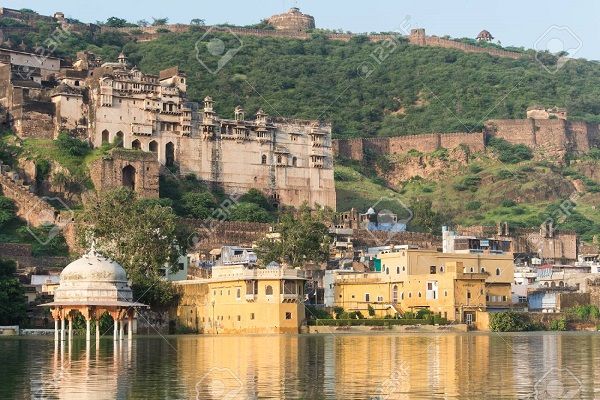
Bundi palace
Now, I will be sharing places for which you require two full days, and the first ones are Kota and Bundi.
Bundi is a heritage city with a lake, a palace, a fort, and many beautiful temples and stepwells. A lot of people who have explored Jaipur and want to explore a place similar to the Pink City visit Bundi.
Along with Bundi, you can also visit Kota for five to six hours of sightseeing. It is not a touristy city, but still, there are some good places to visit.
6. Ranthambore National Park

Tiger at Ranthambore national park
Ranthambore National Park in Sawai Madhopur is a 180-kilometer drive from Jaipur.
You can plan a two-day trip here because reaching there will take around four hours, and there is also a safari that takes a few hours. It is possible to complete this tour in one day, but I suggest planning a two-day stay here because Ranthambore also has other places to visit, like Ranthambore Fort.
7. Jodhpur
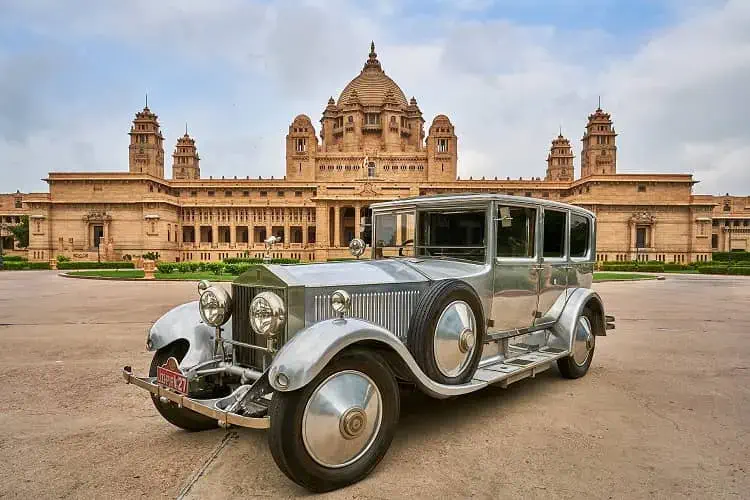
Umaid Bhawan Palace, Jodhpur
Jodhpur is a 325–350-kilometer drive from Jaipur, and a new expressway is coming soon.
In Jodhpur, you can visit Mehrangarh Fort, Jaswant Thada, Umaid Bhawan Palace, Clock Tower Market, and many more sites.
Jodhpur is also famous for its street food, Rajasthani thali, and some amazing metal handicrafts made here.
Famous Temples in Jaipur
Jaipur is home to many centuries-old temples, some of which were built even before Jaipur itself was established. So, if you are someone who loves visiting temples that are 300–400 years old, along with newer temples, here is a list of some famous temples in Jaipur that you can visit during your trip.

Birla Temple, JLN Marg Jaipur
1. Govind Dev Ji Temple: Govind Dev Ji Temple was established in Jaipur during the reign of Mughal Emperor Aurangzeb, when many temples in Vrindavan were under threat. The Maharaja of Jaipur brought the idol of Govind Dev Ji, a form of Shri Krishna, from Vrindavan to Jaipur. Today, you can visit this famous temple inside the City Palace complex.
2. Moti Dungri Ganesh Temple: Moti Dungri Ganesh Temple is another historic temple in Jaipur. Although its exact establishment date is not clearly documented, the temple has a long history and is deeply connected with local traditions. Today, many people who purchase a property or a new vehicle in Jaipur, and even elsewhere in Rajasthan, visit this temple first to seek Ganesh Ji’s blessings. Even locals follow this tradition before beginning a new chapter in their lives.
3. Khole Ke Hanuman Ji Temple: Khole Ke Hanuman Ji Temple is a famous Hanuman temple located near Transport Nagar, among the Aravalli hills within Jaipur. People sometimes celebrate birthdays and other special occasions here by booking the temple’s dining facilities and arranging a traditional meal of dal baati churma. A sawa mani typically involves offering food in a quantity associated with 1.25 units, and arrangements may be made to serve at least 125 plates. A proper seating arrangement is organised inside the temple premises, where family members, friends, and other guests can enjoy the meal together.
4. Birla Mandir, Jaipur: Birla Mandir was built after India’s independence by the Birla family. This beautiful white-marble temple is situated on a small hill near JLN Marg, within the city. Dedicated to Shri Vishnu and Goddess Lakshmi, the temple attracts tourists and devotees throughout the year and is particularly beautiful to visit in the evening.
5. Kale Hanuman Ji Temple, Pink City: Kale Hanuman Ji Temple is a famous temple in Jaipur dedicated to Shri Maruti Nandan Hanuman. As the name suggests, the temple is known for its distinctive black-coloured idol of Hanuman Ji. Every Tuesday and Saturday, the temple attracts large numbers of devotees, mostly locals, along with visitors from outside Jaipur.
6. Akshaya Patra Mandir, Mahal Road, Jagatpura: Akshaya Patra Mandir is associated with the ISKCON community and is located in Jagatpura, near Mahal Road. The temple is dedicated to Shri Krishna and Radha. The word Akshaya Patra refers to an inexhaustible vessel, symbolizing an endless supply of food. The temple complex is a popular place for devotees seeking a peaceful spiritual experience.

Jagdish Ji Maharaj temple, Goner
7. Jagdish Maharaj temple, Goner: Jagdish Maharaj Ji Temple is believed to be around 750 years old, making it much older than Jaipur city itself. The temple is dedicated to Jagdish Maharaj Ji, a form of Shri Krishna, and is an important pilgrimage site for Krishna devotees. Goner is a small town located just outside Jaipur’s city limits and is considered a holy place, attracting followers of Shri Krishna from across eastern Rajasthan.
Apart from these, Jaipur is home to many other famous temples, including several historic Jain temples. One notable example is Sanghiji Digamber Jain Temple in Sanganer, known for its intricate architecture and religious significance.
If you want more information about other famous temples in Jaipur, you can contact our team through our contact page.
Heritage places turned in hotel
In Jaipur, you will notice that some hotels have very huge courtyards and entrances that look like they were made during the royal era.
These hotels are not newly built ones. They were once small palaces, forts, or havelis (mansions) belonging to members of royal families and sometimes to members of the royal court.

Rambagh Palace
Since these were personal properties, after India’s independence in 1947, many of their owners, including royal family members and members of the royal court, converted them into heritage hotels and resorts. And Jaipur has no shortage of them.
Below, I have shared a list of some heritage hotels and resorts that were once palaces, forts, and havelis built more than three to four hundred years ago. These are:
- Naila Fort: A historic fort near Jaipur that has been converted into a heritage property, offering a royal setting and traditional architecture.
- Kanota Fort: A heritage fort near Jaipur, known for its old-world charm and royal Rajasthani architecture.
- Castle Kalwar: A heritage property near Jaipur that offers a glimpse of Rajasthan’s traditional architecture and royal hospitality.
- Rambagh Palace: Once the residence of Jaipur’s royal family, this grand palace has been converted into a luxury heritage hotel.
- Samode Palace: A historic palace known for its beautiful courtyards, frescoes, and traditional Rajasthani architecture.
- Chomu Palace: A historic palace near Jaipur that has been converted into a heritage hotel, featuring traditional royal architecture and grand courtyards.


